Crisis Management 危機管理 Vol.2

(The below link is in English.)

危機管理は、国家的緊急事態については平時の防災と事態発生後72時間以降の復旧対応の間の事態発生後72時間以内の対処であり、また、国家的緊急事態以外でも事態発生後早い段階での対処を意味します。したがって防災は標題の危機管理には直接は当たりませんが、防災・復旧は危機管理と一体的に平時より十分に準備しておく必要があることから、随時ここで触れていくこととなります。

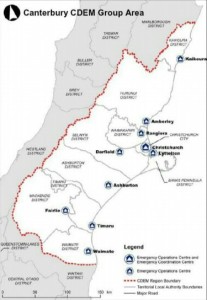
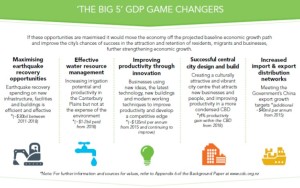
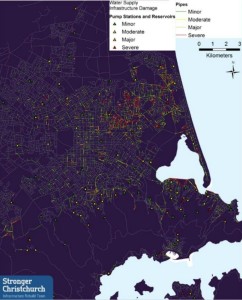
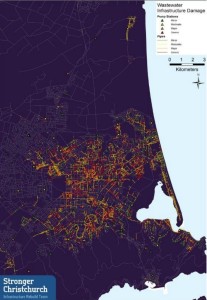
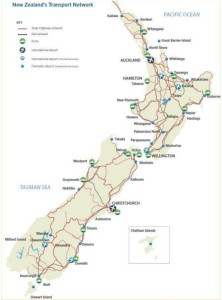
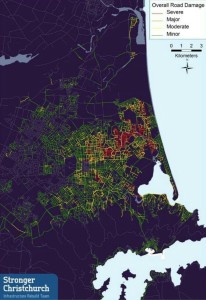
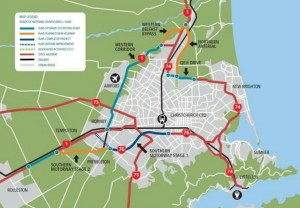
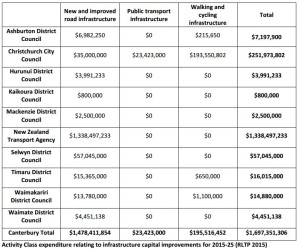
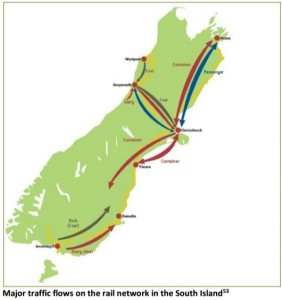
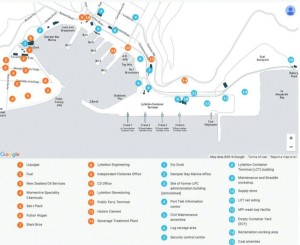
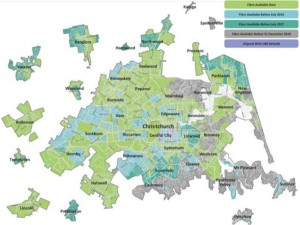
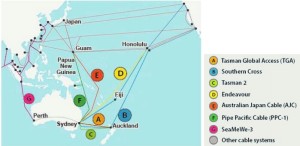
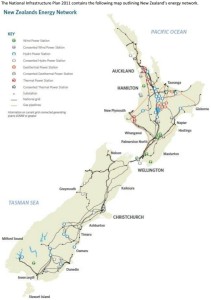
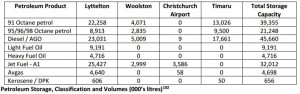
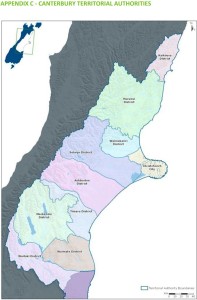
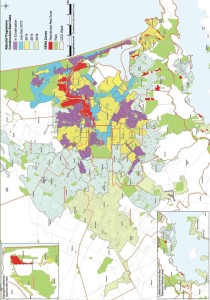
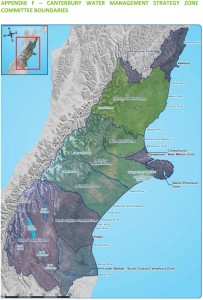
今日は、ニュージーランドのクライストチャーチ市経済インフラ状況レポートの最新版 Latest Christchurch Economic Infrastructure Situation Report online (see PDF) | @CDCChristchurch @ChristchurchCC @SCIRT_info (#Chch #CDEM #lgnz #ECan #CHC_Airport #ChorusNZ #ufbnz #OrionNZ…) をごく簡単にご紹介します。2011年カンタベリー地震等による被害からの復旧等が記載されており、PDFの総論 General context(p9-21)、水 Water(p23,30,32,34-39)、交通 Transport(p48-50,52-66)、通信 Communications(p72-76,78-79)、エネルギー Energy(p84,87-89,91-94)に本Christchurch市の、その他のページに広域周辺地域及び国の、現状や政策等が記されています。以下、PDF内の図表をいくつか貼っておきます。

CDEM
Game Changers

Water Supply Damage
Wastewater Damage

NZ Transport Networks
Road Damage
Roads Significance
Expenditure
Rail Traffic
Lyttleton Port

Enable Networks
Tasman Global

Energy
Pet Storage

Authorities
Rebuild
Zones
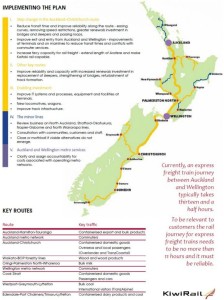
Implementing
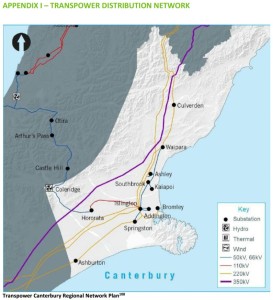
Distribution

Crisis Management 危機管理 Vol.1

(All the below links are in English.)

9月1日は、日本では防災の日(参考 Preparing for Disaster a Part of Japanese Life | Richard Medhurst @nippon_en)です。防災・危機管理の訓練を各組織で行うのが通例です。地球気候変動による自然災害の増加に加え、事故や事件が減ることも無い上、国際情勢の流動性・連動性により国家安全保障事案も増え、ますます平時より不測の事態に備えるしかありません。

企業など組織においては、職員の生命・財産の安全の確保はもちろんですが、組織の業務や財産の維持、組織風評等に係る対応などにも気を抜けません。加えて、災害・事故・事件とは別で、生命・財産には関係しないが社会的には要対応という案件も存在し、対応自体は感覚的に危機管理に近いものとなります。

今後、折に触れて書きますが、まずはご参考まで、ここ最近の英文記事を以下挙げておきます。

Japan 日本
Olympic task: Tokyo is already in crisis management mode for 2020 Games (Sep 1) | Justin McCurry @EYnews @guardian
With four years to go, Tokyo wants to ensure its Olympic Games will be protected against both cyber-attacks and earthquakes
~ Preparing for natural disasters
~ The threat from cyberspace
~ Towards sustainability

Natural disasters 自然災害
Five Key Points from the 2016 World Risk Report (Aug 26) | Caitlin Werrell & Francesco Femia; @CntrClimSec @UNUEHS
~ Fact 1: Disasters and disaster risk are on the rise worldwide
~ Fact 2: There is no such thing as a natural disaster
~ Fact 3: Infrastructure is a key risk factor
~ Fact 4: Infrastructure alone is not enough, it must also be maintained and managed correctly
~ Fact 5: Southeast Asia, Central America, Oceania and the Southern Sahel are consistently disaster risk hotspots

National security 国家安全保障
Vietnamese president says there will be no winners if countries war over South China Sea: Tran Dai Quang said the “recent worrying developments” in the disputed waters is threatening regional security. (Aug30) | Nandini Krishnamoorthy ‏@IBTimes @AssociatedRisks

Violence 銃事件
American University attack: at least 12 dead and 44 injured in Afghanistan- Students in Kabul were trapped in classrooms amid explosions and automatic gunfire as militants attacked the university (Aug 25) | Sune Engel Rasmussen @guardian @ScholarsAtRisk

Terrorism テロリズム
Terrorism and political violence guide (Aug 16) | @StrategicRISK

Oil production エネルギー安全保障
3 reasons why an OPEC production cap is still unlikely (Aug 14) | Jon Lang @risk_insights

Economic stability 経済の安定
economic rebalancing and reforming the IMF: The former Bank of England governor discusses Brexit, radical regulatory reform, the difficulties rebalancing the European and global economies and an overhaul of the International Monetary Fund (Aug 24) | Christopher Jeffery @CentralBanking_ @RiskDotNet

Cables 通信回線の物理的脆弱性
Severed Communications: Businesses face risks from undersea data cable vulnerabilities. (Aug 3) | Jonathan McGoran @RiskInsurance

Cyber サイバー攻撃
Incidents in 2015 proved that executives need to get familiar with cyber-risk. Find out your company’s risk level (Feb 4) | Rob Sloan @DJCompliance @InfosecurityMag

Earthquakes 地震
Small Villages Hit Hardest by Italian Earthquake (Aug 24) | Caroline McDonald‏ @RiskMgmt

Flood 洪水
3 strategies for recovering from flood losses (Aug 22) | ROBERT W. O’BRIEN @PC_360 @RiskStrategies

Climate change 気候変動
Cities and climate change – the funding gap (Aug 26) | Cecilia Reyes @Zurich

Compliance コンプライアンス
Why Walmart’s Chemicals Disclosure Is a Smart Business Move (Jul 22) | Jessica Lyons Hardcastle @ELDaily @ComplianceRisks

Compliance コンプライアンス
Enterprise compliance retail companies: Changing requirements – Prepare for what’s around the corner | @DeloitteRisks

ツイッター paper.li Vol.5

All the below links are in English.

弊社ツイッターアカウントの一つ @WSjp_insight のRTによる paper.li 掲載記事5件を貼っておきます。

Why You Should Go Glamping in Slovenia | @voguemagazine @jenrunsworld

Adidas will open an automated, robot-staffed factory next year | @BI_RetailNews

25 Power Words to Drive More Engagement With Your Social Campaigns | @jeffbullas @andrewraso1

Agri is the backbone of NZ economy – over 95% is exported. | @NZTEnews

Irish economic growth of 7.8% tops euro zone again | @RTEbusiness

Ireland アイルランド Vol.4

アイルランド中央銀行の2016年第1四半期レポート Quarterly Financial Accounts Q1 2016 (18 August 2016): Irish households become the fourth most indebted in Europe | @centralbank_ie 概要・抜粋(abstract/excerpts) です。

[概要abstract]
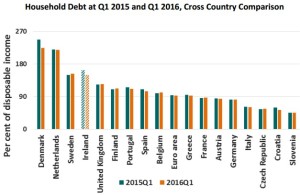
1. Irish households fell from being the third most indebted in the European Union to the fourth most indebted during Q1 2016. This was largely due to the continued reduction in Irish household debt, as well as, further increases in Irish disposable income.
(アイルランド国民の家計は、2016年第1四半期には、EU加盟国中借金が多い3番目から4番目へとなった。可処分所得が一層増えたことと、家計負債が引き続き減ったことが大きい。)
2.Household debt as a proportion of disposable income now stands at 149.4 per cent. That is its lowest level since end-2004.
(可処分所得に対する家計負債は、今、149.4%である。2004年末以来の最低レベルである。)
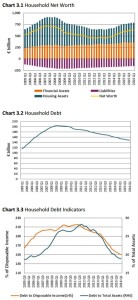
3. Households net worth increased by 0.3 per cent to reach €628.7bn, or €132,141 per capita. The increase in net worth was largely driven by a rise in housing asset values (€1.7bn), as well as a further decline in household liabilities (€0.9bn).
(家計の純資産は、0.3%増の6287億ユーロ、国民一人あたり132141ユーロに達した。家計負債の更なる9億ドルの減少と、住宅財産価値の17億ドルの上昇による。)
4. NFC debt to GDP declined by 9.8 percentage point over the quarter, falling to €257.3bn. Irish NFC debt has been extremely volatile in recent quarters due to the impact of domiciled MNCs on debt and GDP.
(non-financial corporations 非金融法人の総負債は第1四半期に2573億ユーロとなり、対GDP比率は9.8%減った。アイルランド国内に本社を置く multinational corporations 多国籍企業が総負債やGDPへの影響を持つため、最近のいくつかの四半期において非金融法人の総負債は極端に揺れ動いている。)
Household Debt Cross Country Comparison

[補足・抜粋excerpts]
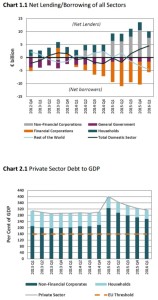
1. Net Lending/Borrowing of All Sectors (Chart 1.1 関連)
The domestic economy continued to be a net lender to the rest of the world during Q1 2016, as the net borrowing of government and financial corporations was exceeded by deleveraging by households and non-financial corporations…

Net LendingBorrowing Private Sector Debt to GDP

2. Private Sector Debt (Chart 2.1 関連)
… CSO revisions to the National Accounts and International Investment Position… redomiciling of some corporations and corporate restructuring… contributed to significant increases in GDP and NFC debt from 2014 onwards. Private sector debt as a percentage of GDP peaked in Q1 2015 at 400.7 per cent, and has since declined substantially to 315.2 per cent in Q1 2016. … primarily by growth in annualised GDP over the period, but is also reflective of falling private sector debt, which has contracted by 3.7 per cent since Q1 2015. …

3. Household Sector
Household Net Worth Debt Indicators

Chart 3.1 関連
… This was partially offset by a decline in households’ holdings of financial assets (€0.5bm). Compared to a post-crisis low of €454.1bn in Q2 2012, household net worth has risen by 38.5 per cent. However, it is still 12.4 per cent lower than its pre-crisis peak of €718bn in Q2 2007.

Chart 3.2 関連
Household debt continued to decrease during Q1 2016, falling by €1.1bn, or 0.7 per cent, to €148.5bn. This represented a household debt per capita of €31,216. Household debt is at its lowest level since Q1 2006. …

Chart 3.3 関連
Indicators of household debt sustainability continued to improve during Q1 2016. Debt as a proportion of disposable income fell over the quarter, from 152.7 per cent to 149.4 per cent, reflecting both the decline in household debt, as well as strong growth in annualised disposable income. …

Comparison Transactions in Financial Assets Deposit Transactions with MFIsGovernment

Chart 3.4 関連
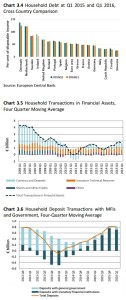
… Over the year Danish household debt fell significantly more than any other country examined, declining by 23.2 percentage points. In contrast to this, Swedish households saw a 4 percentage point increase over the same period as they climbed to become the third most indebted in the European Union, with a household debt level of 153.5 per cent of disposable income.

Chart 3.5 関連
… The reduction in financial assets over the quarter largely reflected a fall in transactions of insurance technical reserves. … The majority of households’ financial investments over the quarter were in the form of currency & deposits, while shares & other equity experienced positive transactions for the first time since Q4 2013.

Chart 3.6 関連
… This marked the first time since Q4 2013 that household deposit transactions with MFIs (monetary financial institutions) had declined. In contrast, households increased lodgements with government deposit accounts for the first time since Q1 2013.

Chart 3.7 関連
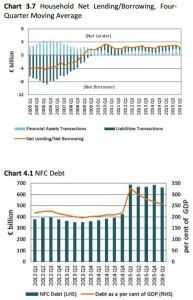
… Over recent quarters net lending has become increasingly driven by higher investment in financial assets, as opposed to deleveraging.

Household Net LendingBorrowing NFC Debt

4. Non-Financial Corporation Sector
Irish NFCs are significantly impacted by the activities of large MNCs. These latest NFC results incorporate the recent annual revisions to the CSO’s International Investment Position (IIP). The revisions include large MNCs which redomiciled to Ireland or moved significant parts of their balance sheets to Ireland during 2014 and 2015. These entities also contributed towards some of the very substantial increase in Irish GDP for 2015.

Chart 4.1 関連
… The decline in debt over the past year largely reflected exchange rate movements. Debt as a percentage of GDP fell from 327.5 per cent in Q1 2015 to 257.3 per cent in Q1 2016. This reflected both falling NFC debt, as well as, substantial GDP growth during 2015.

NFC Debt Comparison Loans AssetsLiabilities

Chart 4.2 関連
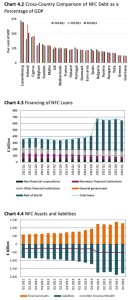
… Luxembourg, which also has a lot of large MNCs relative to the size of its economy, had the highest debt at 349 per cent of GDP. … how volatile Irish NFC debt to GDP has been in recent years compared to other euro area countries.

Chart 4.3 関連
… The substantial increase in debt held by non-residents reflects this corporate activity and explains why exchange rate movements have had a significant impact on NFC debt in some quarters. …debt held by Irish residents has been on a downward trend in recent years. …partly reflected NFC deleveraging with Irish MFIs.

Chart 4.4 関連
…largely reflected MNC activities. Net financial assets (financial assets minus liabilities) became even more negative since Q1 2015. This is because some MNCs had large non-financial assets or relocated substantial non-financial assets to Ireland.

“The Creation and Destruction of Value” 価値の創造と破壊 Vol.9

(All the below links are in English.)

Vol.9 金融革命の度合と限界(第4章-2)

 第二の技術革新は、証券が更なる証券の発行によって保証されていることである。一つの債権を細分化する過程で、債務不履行のリスクは債権の他の性質から切り離されるため、理論的には全ての証券が債務不履行しない形即ちリスク無しで購入されることとなる。また、保証人が新たな保証契約を通じてリスクを転嫁することもできるので、債務不履行の際に損害を被る可能性も低い。
 J.P.モルガンが1995年に始めたもう一つの技術革新であるCDS(Credit Default Swap)は、2008年には58兆ドルに達し、世界GDP合計の50兆ドルを抜いていた。非常に小さいリスクと頼りになる手数料のために、AIGインターナショナルやSwiss Reのような大手かつ多角経営の保険会社がこのような保証契約に魅力を感じ取り組んでいた。リスクに対応するために金融当局が定めた自己資本規制比率も結局無駄になった。2003年からの5年間で米欧の10大銀行は資産を倍増し15兆ユーロに達したが、リスク調整資産は5兆ユーロに達したにすぎなかった。

参考
Credit Derivatives Handbook (PDF) | J.P. Morgan
The Value of Risk: Swiss Re and the History of Reinsurance | Peter Borscheid, Harold James, David Gugerli, Tobias Straumann
Global Financial Stability Report, April 2008 | International Monetary Fund

Olympic オリンピック

2016リオデジャネイロ五輪の選手の方々、その他関係の大勢の方々、大変お疲れさまでした。
日本選手が活躍すると、日本国民として嬉しく感じます。
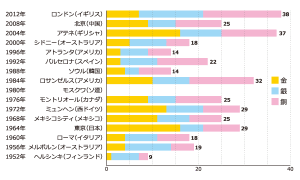
Japan medals ~2012
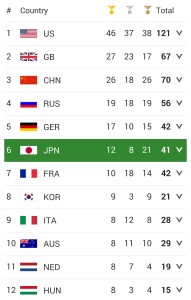
Medals by country
メダルが全てではありませんし、種目数その他の事情もあるのでしょうが、日本の獲得メダル数が過去最多とのこと。
以前ほどじっくり見られませんが、活躍の勢いを感じました。
やはり、金メダル(一位、優勝)は最高ですし、惜しい銀メダルもありましょうし、価値ある三位もありましょう。
負けてこそ、人間的成長が促進される場合もありましょう。団体戦も(エネルギーを相互にもらいながらも)本当に消耗して大変でしょう。

五輪レベルの闘いをしたことがない者が粗雑に私見を言ってしまうならば、
肉体が外国人並みになれば、日本は基本的には
テクノロジーや研究が要求される五輪レベル、世界レベルの闘いで今後益々実力や実績を伸ばせるのではないでしょうか。
メンタルや気合は、仮に強くない場合でも、実力が付き実績が伸びてくれば、徐々に伴って来るはずです。
そして、徐々に全ての層がさらに厚くなり、益々強くなる。
日本の素晴らしい今あるソフトパワーに加えて、実績自体もソフトパワーになる。

問題は、テクノロジー・研究、強い肉体や国民生活などを支える経済力、そして、様々な駆け引きなどを要求しまた経済力を左右する国際政治力ではないでしょうか。
政財学官が一体となって、改革その他により経済力や政治力の強化がなされることを国民として望んでおります。

あくまで参考: Rio 2016 Olympic Games: Medals per capita | @StatisticsNZ など

New Zealand ニュージーランド Vol.3

ニュージーランド貿易・投資概観です。(Link in 1.(1)is in Japanese, and links in 2. are in English.)

1.(1)ニュージーランド(New Zealand)基礎データ 平成27年7月14日 の「経済」(以下、データは概ね2014年)の
「9.総貿易額」によると、
総額は1,010億NZドル、NZからの輸出は500億NZドル、NZへの輸入は510億NZドル、
となっています。
 また、「10.主要貿易品目」によると、
NZからの輸出は、酪農製品(32%)、食肉(13%)、木材(9%)、
NZへの輸入は、石油・鉱物燃料(15%)、自動車(13%)、機械類(12%)、
となっています。
 そして、「11.主要貿易相手国」によると、
総額は、中国(18.4%)、豪州(14.8%)、米国(10.5%)、日本(6.3%)、
NZからの輸出は、中国(19.9%)、豪州(17.5%)、米国(9.4%)、日本(5.9%)、
NZへの輸入は、中国(16.9%)、豪州(12.2%)、米国(11.6%)、日本(6.7%)、
となっています。

(2)「二国間関係」の「1.政治経済関係」によると、
「二国間の貿易」の総額は約5,419億円、NZから日本へは約2,910億円、日本からNZへは約2,509億円、
NZから日本への品目は、乳製品、木材、アルミニウム、肉類、果実類、野菜類、魚介類、
日本からNZへの品目は、自動車、石油、ブルドーザー類、印刷機、自動車部品類、
となっています。
 加えて、「日本からNZへの直接投資残高」は、2,604億円 となっています。

2.(1)「OUR SECTORS」| @NZTEnews (主要経済分野)として、
・ Agribusiness
・ Biotechnology
・ Geothermal *
・ Consultancy services
・ Creative, film and TV
・ Food and Beverage *
・ Health technology
・ High value manufacturing
・ Information and communications technology
・ Marine
・ Natural products *
・ Oil and gas
の12分野が挙げられ、それぞれに概要説明等が掲載されています(* は更なる分類等有り)。

(2)「EXPORT MARKETS」 | @NTZEnews として、世界各国につき概要説明があります。
 日本については、Japan | @NZTEnews において、
ニュージーランドからの輸出分野として、
・ Food and beverage
・ Healthcare
・ Renewable energy
・ Software, electronics, and engineering
が挙げられ、
FOOD AND BEVERAGE MARKET IN JAPAN | @NZTEnews
も掲載されています。また、

 オーストラリアについては、Australia | @NZTEnews において、
・ Food and beverage
・ Specialised manufacturing
・ Information and communications technology (ICT)
・ Creative and retail
が輸出分野として挙げられ、
NEW ZEALAND’S TRADE WITH AUSTRALIA | @NZTEnews なども掲載されています。

 アメリカについては、U.S. | @NZTEnews において、
・ Information and communications technology (ICT)
・ Public sector
・ Healthcare solutions
・ Bioactives
・ Food and beverage
・ Agribusiness
・ Marine and aviation
が輸出分野として挙げられ、投資についても少し触れられています。
また、FOOD AND BEVERAGE MARKET IN THE UNITED STATES | @NZTEnews なども掲載されています。

 カナダについては、Canada | @NZTEnews において、
・ Food and beverage
・ Wine and other alcoholic beverages
・ Manufactured goods and information technology(Aerospace、Marine、Utilities and infrastructure)
が輸出分野として挙げられ、
SUSTAINABILITY MARKET INTELLIGENCE IN NORTH AMERICA | @NZTEnews も掲載されています。

(3)「SECTORS OF OPPORTUNITY」| @NZTEnews(主要投資分野)として、
・ Food and beverage manufacturing
・ Primary production
・ Information and communication technology
・ High-value manufacturing
・ Infrastructure
・ Oil and gas
・ Shared services
の7分野が挙げられ、
それぞれに詳細な概要及び強みを持つ地方(“ニュージーランド Vol.2” の2.PDF)も掲載されています。

ツイッター paper.li Vol.4

All the below links are in English.

弊社ツイッターアカウントの一つ @WSjp_insight のRTによる paper.li 掲載記事7件を貼っておきます。

Irish economic growth | @RTEbusiness

Ireland’s national accounts | @ucddublin @Aidan_Regan

Soon Your Smart Car Will Also Be an Amazon Locker | @BloombergCA @ElisBehrmann @rweiss5

2016 @BSAnews GLOBAL CLOUD COMPUTING SCORECARD (pdf) | @invest_canada

IMF Backs More BOJ Easing If Coupled With Comprehensive Reforms | @business @RichMiller28

Nagasaki, 1945: “The world did not need your experiment” | @jricole

Rio 2016: What Olympic sports taught 8 leaders about successfully running a business | @Inc @JustinJBariso

World Vol.1(UNCLOS 国連海洋法条約)

United Nations Convention on the Law of the Sea (UNCLOS)
PART II  TERRITORIAL SEA AND CONTIGUOUS ZONE
SECTION 3. INNOCENT PASSAGE IN THE TERRITORIAL SEA
SUBSECTION A. RULES APPLICABLE TO ALL SHIPS
Article 19  Meaning of innocent passage
1. Passage is innocent so long as it is not prejudicial to the peace, good order or security of the coastal State. Such passage shall take place in conformity with this Convention and with other rules of international law.
2. Passage of a foreign ship shall be considered to be prejudicial to the peace, good order or security of the coastal State if in the territorial sea it engages in any of the following activities:
(a) any threat or use of force against the sovereignty, territorial integrity or political independence of the coastal State, or in any other manner in violation of the principles of international law embodied in the Charter of the United Nations;
(b) any exercise or practice with weapons of any kind;
(c) any act aimed at collecting information to the prejudice of the defence or security of the coastal State;
(d) any act of propaganda aimed at affecting the defence or security of the coastal State;
(e) the launching, landing or taking on board of any aircraft;
(f) the launching, landing or taking on board of any military device;
(g) the loading or unloading of any commodity, currency or person contrary to the customs, fiscal, immigration or sanitary laws and regulations of the coastal State;
(h) any act of wilful and serious pollution contrary to this Convention;
(i) any fishing activities;
(j) the carrying out of research or survey activities;
(k) any act aimed at interfering with any systems of communication or any other facilities or installations of the coastal State;
(l) any other activity not having a direct bearing on passage.
Article 24  Duties of the coastal State
1. The coastal State shall not hamper the innocent passage of foreign ships through the territorial sea except in accordance with this Convention. In particular, in the application of this Convention or of any laws or regulations adopted in conformity with this Convention, the coastal State shall not:
(a) impose requirements on foreign ships which have the practical effect of denying or impairing the right of innocent passage; or
(b) discriminate in form or in fact against the ships of any State or against ships carrying cargoes to, from or on behalf of any State.
2. The coastal State shall give appropriate publicity to any danger to navigation, of which it has knowledge, within its territorial sea.
Article 25  Rights of protection of the coastal State
1. The coastal State may take the necessary steps in its territorial sea to prevent passage which is not innocent.
2. In the case of ships proceeding to internal waters or a call at a port facility outside internal waters, the coastal State also has the right to take the necessary steps to prevent any breach of the conditions to which admission of those ships to internal waters or such a call is subject.
3. The coastal State may, without discrimination in form or in fact among foreign ships, suspend temporarily in specified areas of its territorial sea the innocent passage of foreign ships if such suspension is essential for the protection of its security, including weapons exercises. Such suspension shall take effect only after having been duly published.
SECTION 4. CONTIGUOUS ZONE
Article 33  Contiguous zone
1. In a zone contiguous to its territorial sea, described as the contiguous zone, the coastal State may exercise the control necessary to:
(a) prevent infringement of its customs, fiscal, immigration or sanitary laws and regulations within its territory or territorial sea;
(b) punish infringement of the above laws and regulations committed within its territory or territorial sea.
2. The contiguous zone may not extend beyond 24 nautical miles from the baselines from which the breadth of the territorial sea is measured.

PART V  EXCLUSIVE ECONOMIC ZONE
Article 56  Rights, jurisdiction and duties of the coastal State in the exclusive economic zone
1. In the exclusive economic zone, the coastal State has:
(a) sovereign rights for the purpose of exploring and exploiting, conserving and managing the natural resources, whether living or non-living, of the waters superjacent to the seabed and of the seabed and its subsoil, and with regard to other activities for the economic exploitation and exploration of the zone, such as the production of energy from the water, currents and winds;
(b) jurisdiction as provided for in the relevant provisions of this Convention with regard to:
(i) the establishment and use of artificial islands, installations and structures;
(ii) marine scientific research;
(iii) the protection and preservation of the marine environment;
(c) other rights and duties provided for in this Convention.
2. In exercising its rights and performing its duties under this Convention in the exclusive economic zone, the coastal State shall have due regard to the rights and duties of other States and shall act in a manner compatible with the provisions of this Convention.
3. The rights set out in this article with respect to the seabed and subsoil shall be exercised in accordance with Part VI.
Article 58  Rights and duties of other States in the exclusive economic zone
1. In the exclusive economic zone, all States, whether coastal or land-locked, enjoy, subject to the relevant provisions of this Convention, the freedoms referred to in article 87 of navigation and overflight and of the laying of submarine cables and pipelines, and other internationally lawful uses of the sea related to these freedoms, such as those associated with the operation of ships, aircraft and submarine cables and pipelines, and compatible with the other provisions of this Convention.
2. Articles 88 to 115 and other pertinent rules of international law apply to the exclusive economic zone in so far as they are not incompatible with this Part.
3. In exercising their rights and performing their duties under this Convention in the exclusive economic zone, States shall have due regard to the rights and duties of the coastal State and shall comply with the laws and regulations adopted by the coastal State in accordance with the provisions of this Convention and other rules of international law in so far as they are not incompatible with this Part.
Article 59  Basis for the resolution of conflicts regarding the attribution of rights and jurisdiction in the exclusive economic zone
In cases where this Convention does not attribute rights or jurisdiction to the coastal State or to other States within the exclusive economic zone, and a conflict arises between the interests of the coastal State and any other State or States, the conflict should be resolved on the basis of equity and in the light of all the relevant circumstances, taking into account the respective importance of the interests involved to the parties as well as to the international community as a whole.
Article 73  Enforcement of laws and regulations of the coastal State
1. The coastal State may, in the exercise of its sovereign rights to explore, exploit, conserve and manage the living resources in the exclusive economic zone, take such measures, including boarding, inspection, arrest and judicial proceedings, as may be necessary to ensure compliance with the laws and regulations adopted by it in conformity with this Convention.
2. Arrested vessels and their crews shall be promptly released upon the posting of reasonable bond or other security.
3. Coastal State penalties for violations of fisheries laws and regulations in the exclusive economic zone may not include imprisonment, in the absence of agreements to the contrary by the States concerned, or any other form of corporal punishment.
4. In cases of arrest or detention of foreign vessels the coastal State shall promptly notify the flag State, through appropriate channels, of the action taken and of any penalties subsequently imposed.

PART VI  CONTINENTAL SHELF

PART VII  HIGH SEAS
SECTION 1.  GENERAL PROVISIONS
Article 98  Duty to render assistance
1. Every State shall require the master of a ship flying its flag, in so far as he can do so without serious danger to the ship, the crew or the passengers:
(a) to render assistance to any person found at sea in danger of being lost;
(b) to proceed with all possible speed to the rescue of persons in distress, if informed of their need of assistance, in so far as such action may reasonably be expected of him;
(c) after a collision, to render assistance to the other ship, its crew and its passengers and, where possible, to inform the other ship of the name of his own ship, its port of registry and the nearest port at which it will call.
2. Every coastal State shall promote the establishment, operation and maintenance of an adequate and effective search and rescue service regarding safety on and over the sea and, where circumstances so require, by way of mutual regional arrangements cooperate with neighbouring States for this purpose.

海洋法に関する国際連合条約 (国連海洋法条約)
第2部 領海及び接続水域
第3節 領海における無害通航
A すべての船舶に適用される規則
第19条 無害通航の意味
1 通航は、沿岸国の平和、秩序又は安全を害しない限り、無害とされる。無害通航は、この条約及び国際法の他の規則に従って行わなければならない。
2 外国船舶の通航は、当該外国船舶が領海において次の活動のいずれかに従事する場合には、沿岸国の平和、秩序又は安全を害するものとされる。
a.武力による威嚇又は武力の行使であって、沿岸国の主権、領土保全若しくは政治的独立に対するもの又はその他の国際連合憲章に規定する国際法の諸原則に違反する方法によるもの
b.兵器(種類のいかんを問わない。)を用いる訓練又は演習
c.沿岸国の防衛又は安全を害することとなるような情報の収集を目的とする行為
d.沿岸国の防衛又は安全に影響を与えることを目的とする宣伝行為
e.航空機の発着又は積込み
f.軍事機器の発着又は積込み
g.沿岸国の通関上、財政上、出入国管理上又は衛生上の法令に違反する物品、通常又は人の積込み又は積卸し
h.この条約に違反する故意のかつ重大な汚染行為
i.漁獲活動
j.調査活動又は測量活動の実施
k.沿岸国の通信系又は他の施設への妨害を目的とする行為
l.通航に直接の関係を有しないその他の活動
第24条 沿岸国の義務
1 沿岸国は、この条約に定めるところによる場合を除くほか、領海における外国船舶の無害通航を妨害してはならない。沿岸国は、特に、この条約又はこの条約に従って制定される法令の適用に当たり、次のことを行ってはならない。
a.外国船舶に対し無害通航権を否定し又は害する実際上の効果を有する要件を課すること。
b.特定の国の船舶に対し又は特定の国へ、特定の国から若しくは特定の国のために貨物を運搬する船舶に対して法律上又は事実上の差別を行うこと。
2 沿岸国は、自国の領海内における航行上の危険で自国が知っているものを適当に公表する。
第25条 沿岸国の保護権
1 沿岸国は、無害でない通航を防止するため、自国の領海内において必要な措置をとることができる。
2 沿岸国は、また、船舶が内水に向かって航行している場合又は内水の外にある港湾施設に立ち寄る場合には、その船舶が内水に入るため又は内水の外にある港湾施設に立ち寄るために従うべき条件に違反することを防止するため、必要な措置をとる権利を有する。
3 沿岸国は、自国の安全の保護(兵器を用いる訓練を含む。)のため不可欠である場合には、その領海内の特定の水域において、外国船舶の間に法律上又は事実上の差別を設けることなく、外国船舶の無害通航を一時的に停止することができる。このような停止は、適当な方法で公表された後においてのみ、効力を有する。
第4節 接続水域
第33条 接続水域
1 治岸国は、自国の領海に接続する水域て接続水域といわれるものにおいて、次のことに必要な規制を行うことができる。
a.自国の領土又は領海内における通関上、財政上、出入国管理上又は衛生上の法令の違反を防止すること。
b.自国の領土又は領海内で行われた(a)の法令の違反を処罰すること。
2 接続水城は、領海の幅を測定するための基線から24海里を超えて拡張することができない。

第5部 排他的経済水域
第56条 排他的経済水域における沿岸国の権利、管轄権及び義務
1 沿岸国は、排他的経済水域において、次のものを有する。
a.海底の上部水域並びに海底及びその下の天然資源(生物資源であるか非生物資源であるかを問わない。)の探査、開発、保存及び管理のための主権的権利並びに排他的経済水域における経済的な目的で行われる探査及び開発のためのその他の活動(海水、海流及び風からのエネルギーの生産等)に関する主権的権利
b.この条約の関連する規定に基づく次の事項に関する管轄権
i.人工島、施設及び構築物の設置及び利用
ii.海洋の科学的調査
iii.海洋環境の保護及び保全
c.この条約に定めるその他の権利及び義務
2 沿岸国は、排他的経済水域においてこの条約により自国の権利を行使し及び自国の義務を履行するに当たり、他の国の権利及び義務に妥当な考慮を払うものとし、また、この条約と両立するように行動する。
3 この条に定める海底及びその下についての権利は、第6部の規定により行使する。
第58条 排他的経済水域における他の国の権利及び義務
1 すべての国は、沿岸国であるか内陸国であるかを問わず、排他的経済水域において、この条約の関連する規定に定めるところにより、第87条に定める航行及び上空飛行の自由並びに海底電線及び海底パイプラインの敷設の自由並びにこれらの自由に関連し及びこの条約のその他の規定と両立するその他の国際的に適法な海洋の利用(船舶及び航空機の運航並びに海底電線及び海底パイプラインの運用に係る海洋の利用等)の自由を享有する。
2 第88条から第115条までの規定及び国際法の他の関連する規則は、この部の規定に反しない限り、排他的経済水域について適用する。
3 いずれの国も、排他的経済水域においてこの条約により自国の権利を行使し及び自国の義務を履行するに当たり、沿岸国の権利及び義務に妥当な考慮を払うものとし、また、この部の規定に反しない限り、この条約及び国際法の他の規則に従って沿岸国が制定する法令を遵守する。
第59条 排他的経済水域における権利及び管轄権の帰属に関する紛争の解決のための基礎
この条約により排他的経済水域における権利又は管轄権が沿岸国又はその他の国に帰せられていない場合において、沿岸国とその他の国との間に利害の対立が生じたときは、その対立は、当事国及び国際社会全体にとっての利益の重要性を考慮して、衡平の原則に基づき、かつ、すべての関連する事情に照らして解決する。
第73条 沿岸国の法令の執行
1 沿岸国は、排他的経済水域において生物資源を探査し、開発し、保有し及び管理するための主権的権利を行使するに当たり、この条約に従って制定する法令の遵守を確保するために必要な措置(乗船、検査、拿捕及び司法上の手続を含む。)をとることができる。
2 拿捕された船舶及びその乗組員は、合理的な保証金の支払又は合理的な他の保証の提供の後に速やかに釈放される。
3 排他的経済水域における漁業に関する法令に対する違反について沿岸国が科する罰には、関係国の別段の合意がない限り拘禁を含めてはならず、また、その他のいかなる形態の身体刑も含めてはならない。
4 沿岸国は、外国船舶を拿捕し又は抑留した場合には、とられた措置及びその後科した罰について、適当な経路を通じて旗国に速やかに通報する。

第6部 大陸棚

第7部 公 海
第1節 総 則
第98条 援助を与える義務
1 いずれの国も、自国を旗国とする船舶の船長に対し、船舶、乗組員又は旅客に重大な危険を及ぼさない限度において次の措置をとることを要求する。
a.海上において生命の危険にさらされている者を発見したときは、その者に援助を与えること。
b.援助を必要とする旨の通報を受けたときは、当該船長に合理的に期待される限度において、可能な最高速力で遭難者の救助に赴くこと。
c.衝突したときは、相手の船舶並びにその乗組員及び旅客に援助を与え、また、可能なときは、自己の船舶の名称、船籍港及び寄港しようとする最も近い港を相手の船舶に知らせること。
2 いずれの沿岸国も、海上における安全に関する適切かつ実効的な捜索及び救助の機関の設置、運営及び維持を促進し、また、状況により必要とされるときは、このため、相互間の地域的な取極により隣接国と協力する。

U.S.-Japan Summit Meetings 日米首脳会談 Vol.3(Obama’s visit to Hiroshima Vol.3)

Here is just a part of Tweets related to the visit, war, peace, politics, science, et al (through noon on August 9 (JST)). [All the below are in English.]

Praying for peace in Nagasaki | @nhk_world_news

Nagasaki, 1945: “The world did not need your experiment” | @jricole

Hiroshima wrongly overshadows Nagasaki says @StimsonCenter’s Michael Krepon | @ReThinkDefense

Remembering Hiroshima and Nagasaki with George Shultz and Henry Kissinger, via @NTI_WMD | @ReThinkDefense

Inspired by Nagasaki’s steadfast commitment to the pursuit of peace. | @CarolineKennedy

The great science behind the terrifying history of the atomic bomb – great piece by @nevertoocurious | @kemal_atlay

“Fat Man” was dropped on Nagasaki on Aug 9, 1945, causing Japan to surrender | @newsflicks

This alone highlights need for diplomacy and non-proliferation: What Nagasaki looked like before and after the bomb | @JohnDAxelrod

#HiroshimaDay may have been yesterday, but the effects of a nuclear bomb are long-lasting | @ReThinkDefense

71 years ago today, this was the headline for @nytimes. | @ReThinkDefense

Must-watch: Hiroshima survivor Setsuko Thurlow talks about her life at @ArmsControlNow | @ReThinkDefense

Japan calls for a nuclear weapons free world & for all world leaders to visit | @ReThinkDefense

Obama’s Hiroshima trip stirs debate on Truman’s fateful choice | @ThePartykaGroup

Apology Diplomacy at Hiroshima: my 2010 article in @TheAtlantic | @profLind

On anniversary of Hiroshima bombing, re-up of my piece about memory and reconciliation in US-Japan relations | @profLind

6 August 1945 the Hiroshima explosion recorded at 8.15 a.m. on the remains of a wrist watch found in the ruins | @UN_Photo

Read Harry Truman’s statement on Hiroshima on August 6, 1945 | @Miller_Center

Hiroshima: President Obama and Harry Truman. | @IWF

Obama’s visit to Hiroshima, contextualized via the Truman Library: President Barack Obama is the first sitting U.S.… | @POLSMiami

Truman’s note to Stalin about dropping atomic bomb on Hiroshima #HiroshimaVisit | @Danovate

The Christian answer to all this meaningless suffering is more suffering, willingness to suffer for one’s enemy… | @CosmosTheInLost

Why 71 years after Hiroshima every baby born in 2016 contains nuclear radiation | @3tags_org

The decision to destroy Hiroshima and Nagasaki was a political not a military decision. | @NatCounterPunch

7 stories from Hiroshima and Nagasaki on the 71st anniversary of the nuclear strike | @TIME

On this day in 1945, the US dropped the Atomic Bomb on Hiroshima. See the aftermath | @LIFE

Today in history: The United States drops the “Little Boy” atomic bomb on Hiroshima, killing 70,000 instantly. | @ForeignAffairs

N Korea’s ballistic missile launch lands in Japan’s EEZ, escalating regional tensions | @nukes_of_hazard

@KingstonAReif: Reducing our commitment to#Japanwould ultimately increase threat by nuclear weapons to the US” | @ArmsControlNow

Hiroshima and Nagasaki push for @POTUS to support nuclear arms control efforts in powerful new letter. | @nukes_of_hazard

Still time to advance @POTUS vision of a safer world. “A Nuclear Legacy Within Reach” | @DarylGKimball